Topline This Week
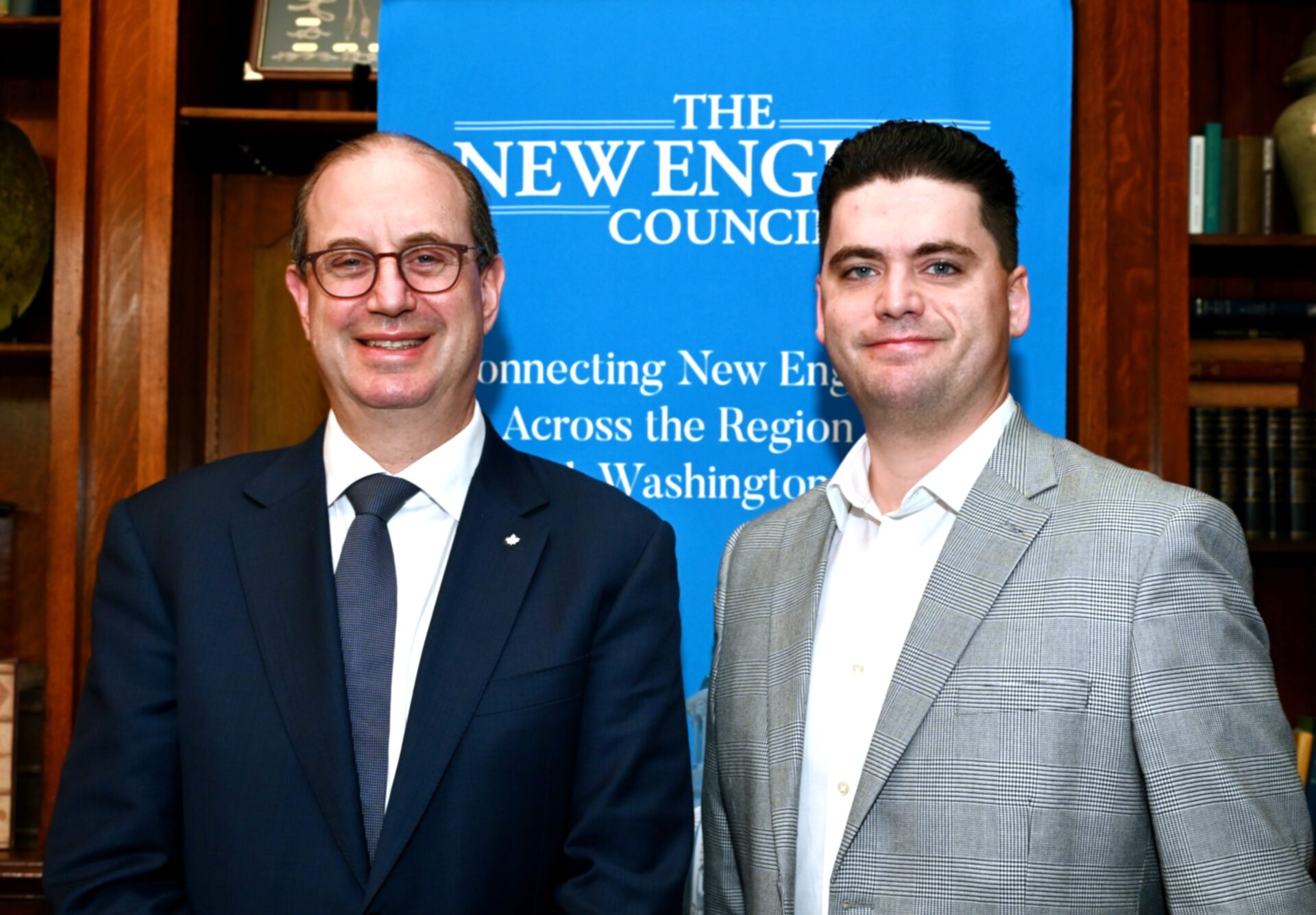
• Connecticut dealers meet with Senator Blumenthal: Members of the Lumber Dealers Association of Connecticut hosted Senator Richard Blumenthal at National Lumber to discuss tariffs and trade impacts on local lumberyards and builders.
• Tariff ruling creates uncertainty on potential refunds: A recent Supreme Court decision on tariffs imposed under the International Emergency Economic Powers Act has raised questions about whether importers may receive refunds for duties already collected.
• New leadership joins ABMA committee: Founding chairman Joe Cecarelli steps down and passes the torch to the next generation as TJ Shaheen of Builders’ General joins the committee.
• Congress advances housing legislation: The bipartisan ROAD to Housing Act moves forward in Congress with several provisions that align with ABMA’s Building Homes – Not Costs housing proposal.
• ABMA continues engagement with the White House: ABMA’s federal advocacy efforts remain focused on housing affordability and regulatory reform, with continued outreach to congressional offices and the White House.
Lumber Dealers Share Tariff Concerns with Senator Blumenthal
Members of the Lumber Dealers Association of Connecticut (LDAC) met with Senator Richard Blumenthal during his visit to National Lumber in North Haven on February 27. Hosted by LDAC President Sean Ryan of National Lumber, the meeting brought together lumber dealers, Senate staff, and LDAC lobbyist Matthew Hallisey to discuss how tariffs and trade policies affect locally owned lumberyards and the builders they serve.
National Lumber’s perspective was particularly important during the discussion. Unlike most dealers, the company imports certain products directly and therefore pays tariffs at the point of entry. That firsthand experience allowed members to explain how trade policy decisions translate into real-world impacts for the businesses supplying building materials throughout the region.
These types of conversations remain essential as policymakers continue to evaluate the role tariffs play in the construction supply chain.
Tariff Ruling Creates Uncertainty Around Potential Refunds
Recent court decisions striking down tariffs imposed under the International Emergency Economic Powers Act (IEEPA) have created significant uncertainty around previously collected duties.
The U.S. Supreme Court ruled that the statute does not authorize the president to impose tariffs under that authority, sending the issue back to lower courts to determine how previously collected tariffs should be handled. A key question now before the U.S. Court of International Trade is whether importers will ultimately be eligible to receive refunds.
Thousands of companies have already filed lawsuits seeking repayment of duties. In most cases, only the importer of record — the company that filed the customs entry and paid the tariff directly to U.S. Customs and Border Protection (CBP) — can pursue a claim.
For most lumber and building material dealers, this distinction is important. The majority of dealers purchase products through buying groups, wholesalers, or domestic distributors rather than importing materials directly. In those cases, tariffs are handled earlier in the supply chain and the dealer is not the importer of record.
However, ABMA is aware that several members do import products directly. For those companies, two primary courses of action are currently being discussed:
• Litigation in the U.S. Court of International Trade (CIT) to seek refunds of tariffs previously paid.
• Administrative protest through CBP, typically by filing CBP Form 19 (Customs Protest) within 180 days of liquidation of the entry.
Given the scale of tariffs involved and the number of affected importers, the legal process could take considerable time to resolve. ABMA will continue monitoring developments and will share updates with members as the courts determine how any potential refunds may be handled.
A New Generation of Leadership at ABMA
ABMA is also marking an important leadership transition.
Founding Chairman Joe Cecarelli is stepping down from the committee and passing his seat to the next generation of industry leadership. Joining the committee is TJ Shaheen, Executive Vice President of Builders’ General, a fierce advocate for the industry and a driving force behind the recent resurgence of the New Jersey Building Material Dealers Association (NJBMDA).
As President of the NJBMDA (founded in 1884) TJ has overseen a renewed level of engagement among members, doubling and tripling attendance at association events while strengthening the organization’s government affairs efforts. He’s proud to drive the legacy of the NJBMDA forward during his term while simultaneously acknowledging and crediting his team; a tenured Board of Directors roster whose support, wisdom, guidance, and friendship have helped him immensely since taking on the role in 2024.
Under TJ’s leadership, NJBMDA has pivoted toward a coalition-based advocacy model in Trenton. Working alongside lobbyist Scot Mackey (MBI-Gluckshaw), the association has focused on identifying issues that affect multiple industries and building consensus with like-minded organizations, while also strengthening direct relationships with legislators.
Now four generations strong, Builders’ General was incorporated 95 years ago in 1931 with its first location in Cranford, New Jersey. Today the company has seven locations and 170 employees led by third-generation brothers Tim Sr. (Chairman), Phil Sr. (CEO/President), sister Betsy, and the fourth-generation; Tim’s sons TJ, Michael, Brian and Phil’s son, Phil III.
Housing Policy Remains a Top Priority
Housing affordability continues to be a central focus of ABMA’s federal advocacy work.
Last week, ABMA lobbyist Jim Thompson conducted outreach across congressional offices while also continuing discussions with the White House regarding ABMA’s Building Homes – Not Costs housing proposal.
At the same time, Congress is advancing the bipartisan ROAD to Housing Act, a comprehensive housing package aimed at increasing supply and improving federal housing programs.
Several elements of the bill align with ABMA’s policy framework, particularly provisions designed to streamline regulatory processes, encourage communities to adopt best practices for zoning and permitting, and reduce duplicative administrative requirements within federal housing programs.
These reforms reflect a key principle behind ABMA’s housing proposal: when government processes become unpredictable or overly complex, the additional time and cost ultimately show up in the price of a home.
At the same time, the legislation stops short of addressing one of the central challenges identified in ABMA’s plan — the cumulative cost impact created by permitting delays, layered mandates, and extended approval timelines.
ABMA’s proposal calls for an affordability guardrail on the total government-driven cost of the building process, creating transparency and accountability around the cost of delays and additional requirements while preserving local control over building codes and permitting systems.
While the ROAD to Housing Act represents a meaningful step toward addressing housing supply challenges, ABMA will continue advocating for policies that ensure government processes support — rather than unintentionally hinder — the ability to build homes at prices the average American can afford.